Digital Literacy Initiative · 2022–2025 · Cumulative Delivery
68
Schools Covered
215
Teachers Trained
770
Laptops Distributed
310
Micro:bit Kits
25,478
Students Benefited
Three years of results, 2023–2025. Implemented by VTOB Foundation, funded by the Beat and Regula Curti Foundation through The Dariu Foundation, with the Ministry of Education and Skills Development as a full partner.
Between 2023 and 2025 the Digital Literacy Initiative put coding into the hands of primary and lower-secondary children in ordinary government schools, in some of the most remote districts of Bhutan. It did so through Bhutanese teachers, working inside the national curriculum. The programme reached 68 schools across 19 of Bhutan’s 20 dzongkhags, trained 215 teachers and delivered 770 laptops. In November 2025 the Ministry took the national coding competition over and now runs it itself. DigiGyel is the next step of the same programme.
A short film of the programme — the figures, the map, and the classrooms behind them.
60 seconds · vertical format for sharing · download
68
Schools reached
215
Teachers trained
770
Laptops
310
Micro:bit kits
25,478
Students reached
Covering the whole programme, 2022–2025, the 2022 pilot included. The pilot year is set out on its own below.
The sheet VTOB publishes, reproduced as issued. Every figure on this page is taken from it.
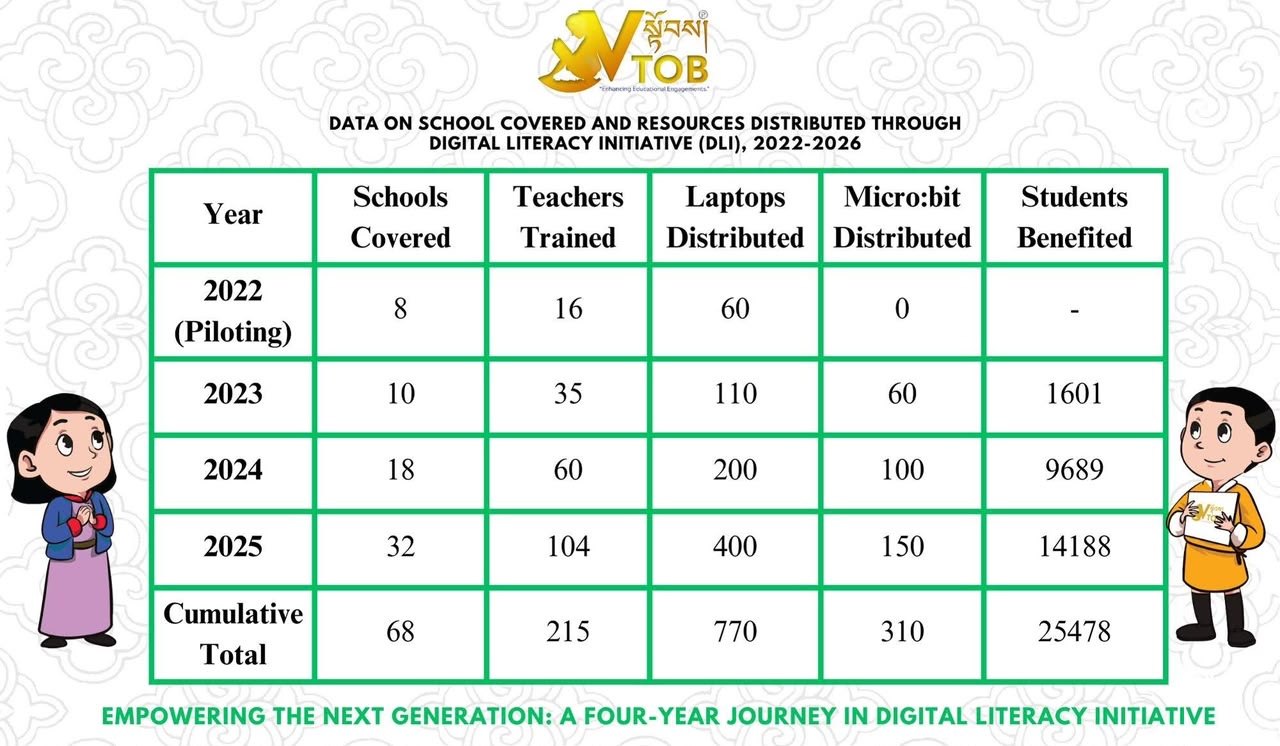
An earlier phase in Punakha and Wangduephodrang — included in the programme totals above, and set out here on its own.
8
Schools
16
Teachers
60
Laptops
0
Micro:bit kits
Student numbers were not recorded for the pilot year.
Each round ran seven days, nine to five, blending face-to-face instruction with online work. Every teacher left with laptops and micro:bits for their school, and an action plan for a code club.
| Round | Dates and venue | Teachers | Schools | Coverage |
|---|---|---|---|---|
| Round 1 | Tshongdu Boutique, Paro (8-14 July 2023) | 35 | 10 | Gasa, Punakha, Wangduephodrang |
| Round 2 | February 2024 | 60 | 18 | Eastern dzongkhags |
| Round 3 | Bajo HSS, Wangduephodrang (18-24 February 2025) | 104 | 32 | 11 dzongkhags and 3 thromdes |
Each measure is on its own scale — they are not comparable on a shared axis. The 2022 pilot is shown for context and labelled as such.
Students reached: 1,601 in 2023, 9,689 in 2024 and 14,188 in 2025 — 25,478 in all. Student numbers were not recorded for the pilot year.
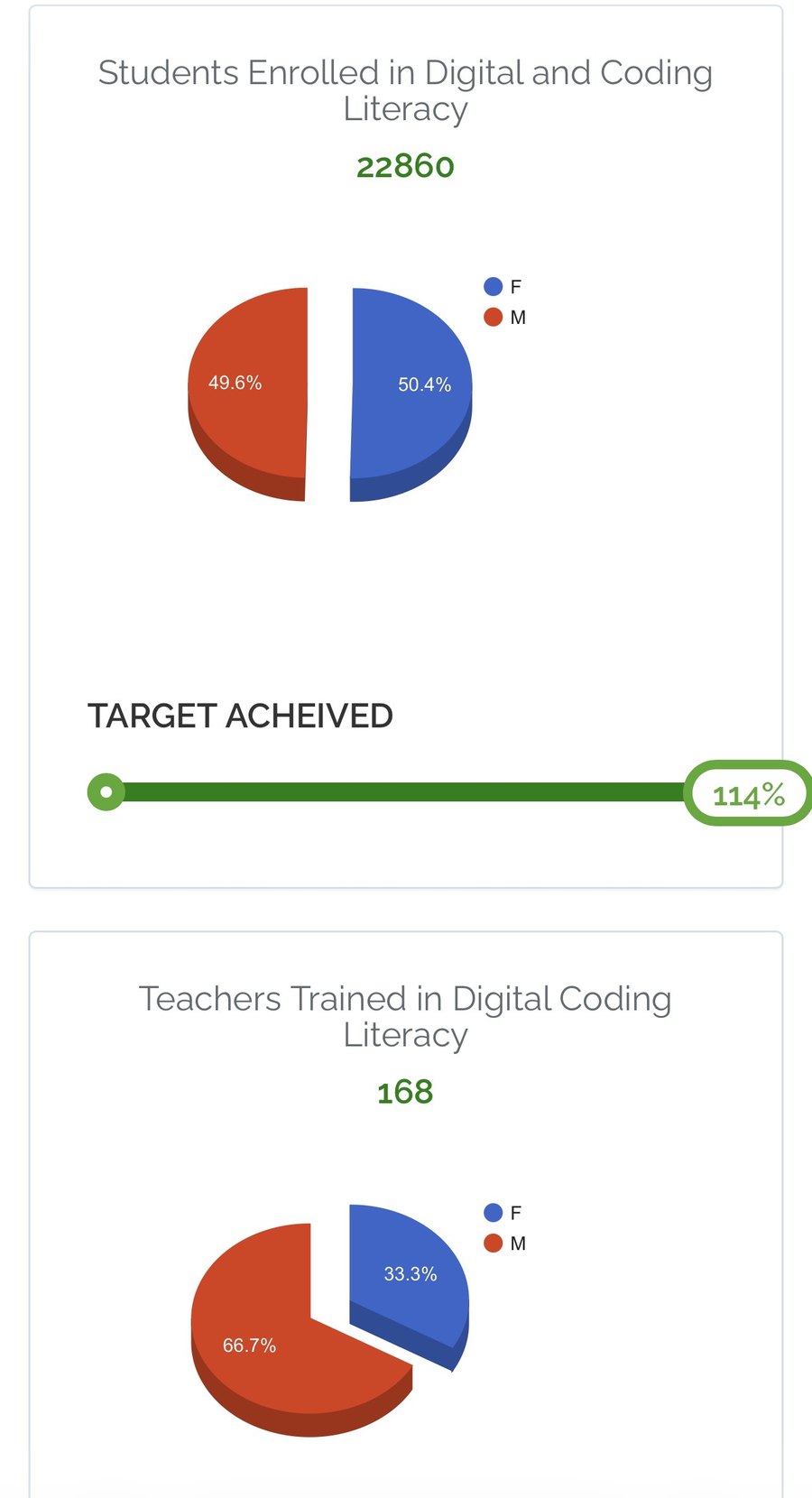
The design approved in 2023 promised 710 laptops, 195 teachers, 7,600 students and 38 schools over three years. Every commitment was exceeded.
Teachers trained
Target metLaptops delivered
Target metSchools reached
Target metStudents reached
Target metForty-eight students from 24 schools presented at Wangdue Primary School for the west and Trashigang Middle Secondary School for the east. Close to 190 projects were catalogued. Children coded the national flag, a Buddhist stupa, a waste-management animation, a campus map, a temperature monitor, and an automatic chair for someone who needs help standing.
The Ministry of Education and Skills Development took the competition over and ran it itself for Classes III–VIII. Not one of the ten winning schools was a Thimphu elite school: first places went to Sherab Gatshel MSS in Samtse and Drametse MSS in Mongar. A donor-funded pilot had become a fixture of the national school calendar.
An independent student survey across ten dzongkhags found girls participating in exactly equal numbers to boys, and a third of students active for more than a year. In a sector where women are systematically under-represented across South Asia, that is the finding worth pausing on.
Lingzhi Lower Secondary School sits at roughly 4,000 metres in the northern highlands, reachable only on foot or by horse. It received five laptops and five micro:bits, and two of its teachers completed the full seven-day training.
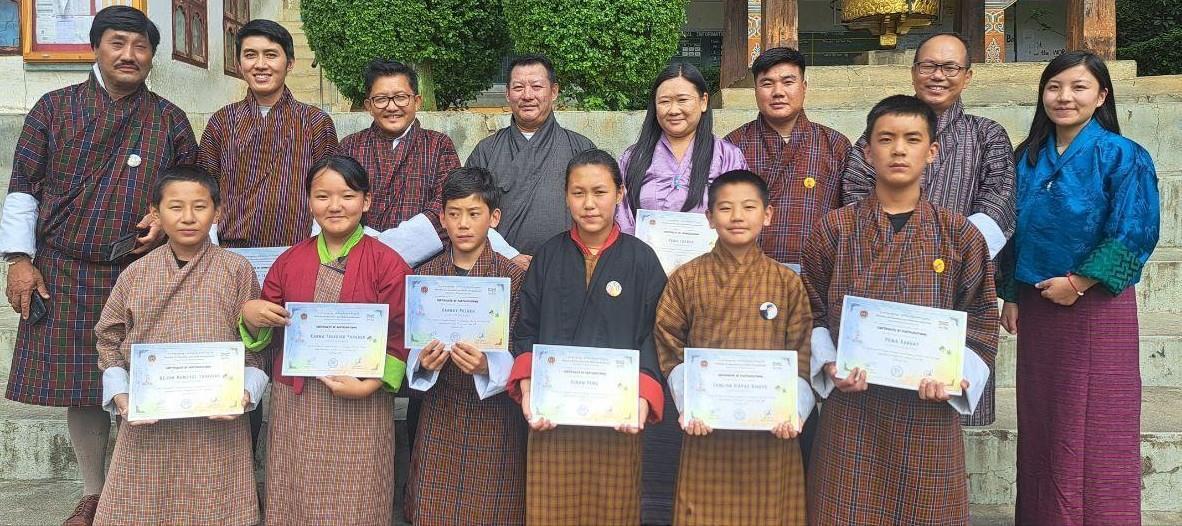
Photographs from the DLI Bhutan Impact Report 2023–2025.
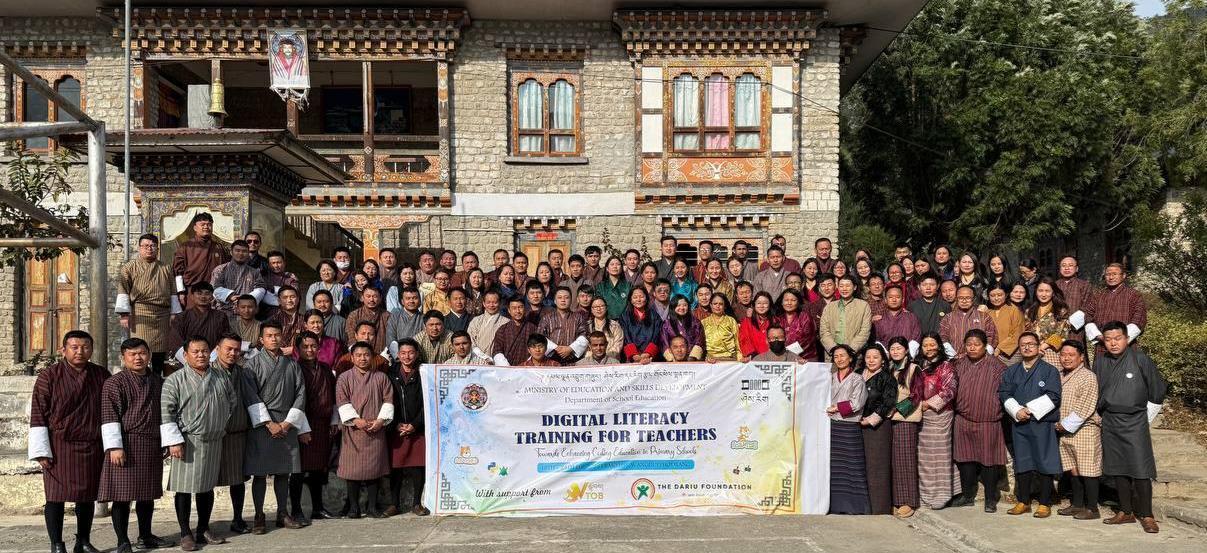
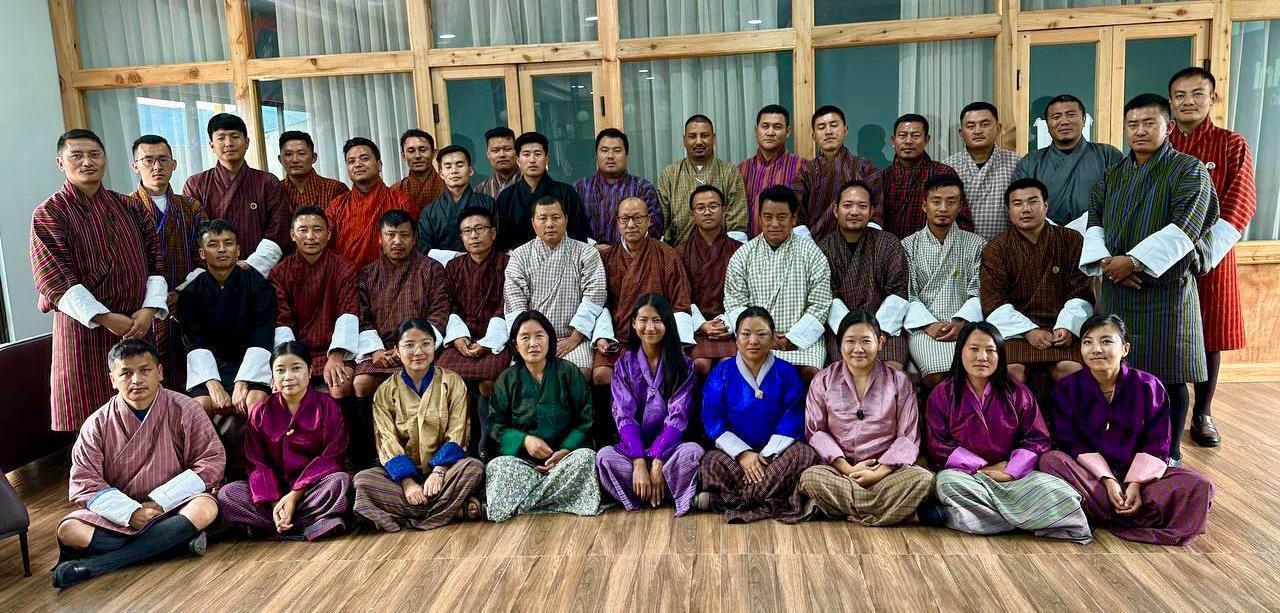
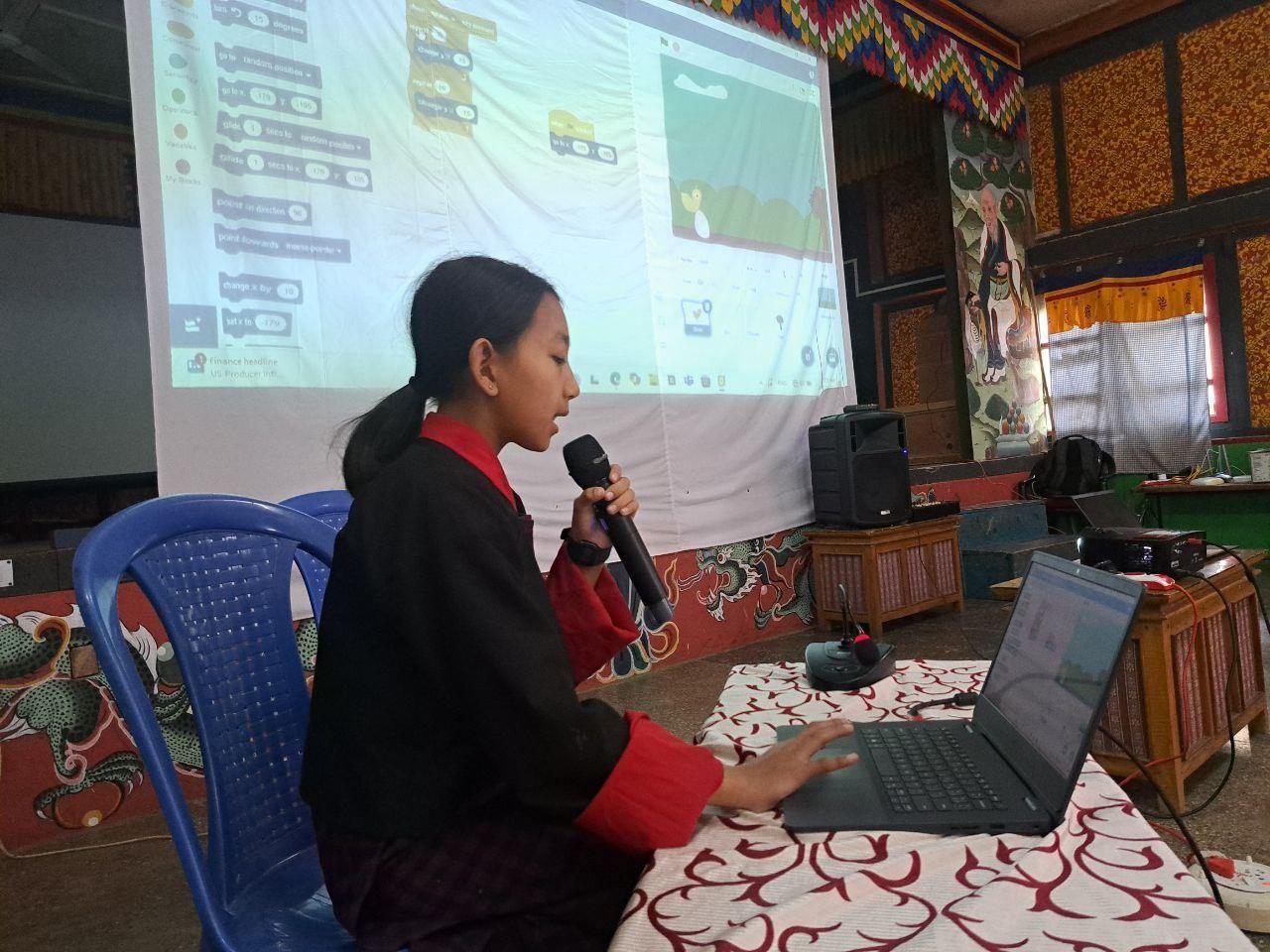
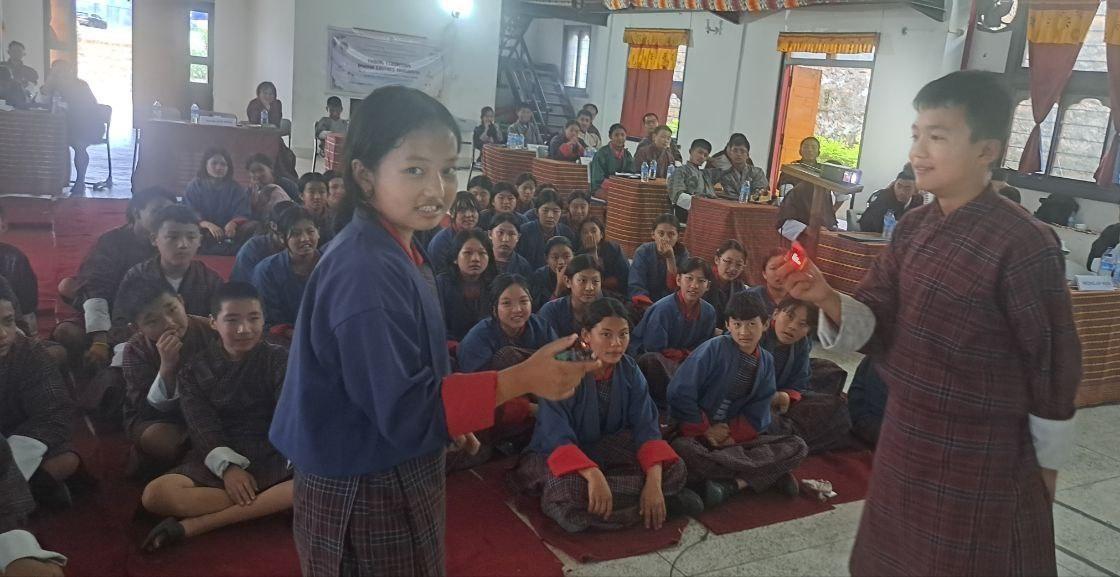
The Initiative reached 68 schools across 19 of Bhutan’s 20 dzongkhags, the eight pilot schools of 2022 included. The breakdown below places 67 of them; 1 is awaiting its dzongkhag in the district record.
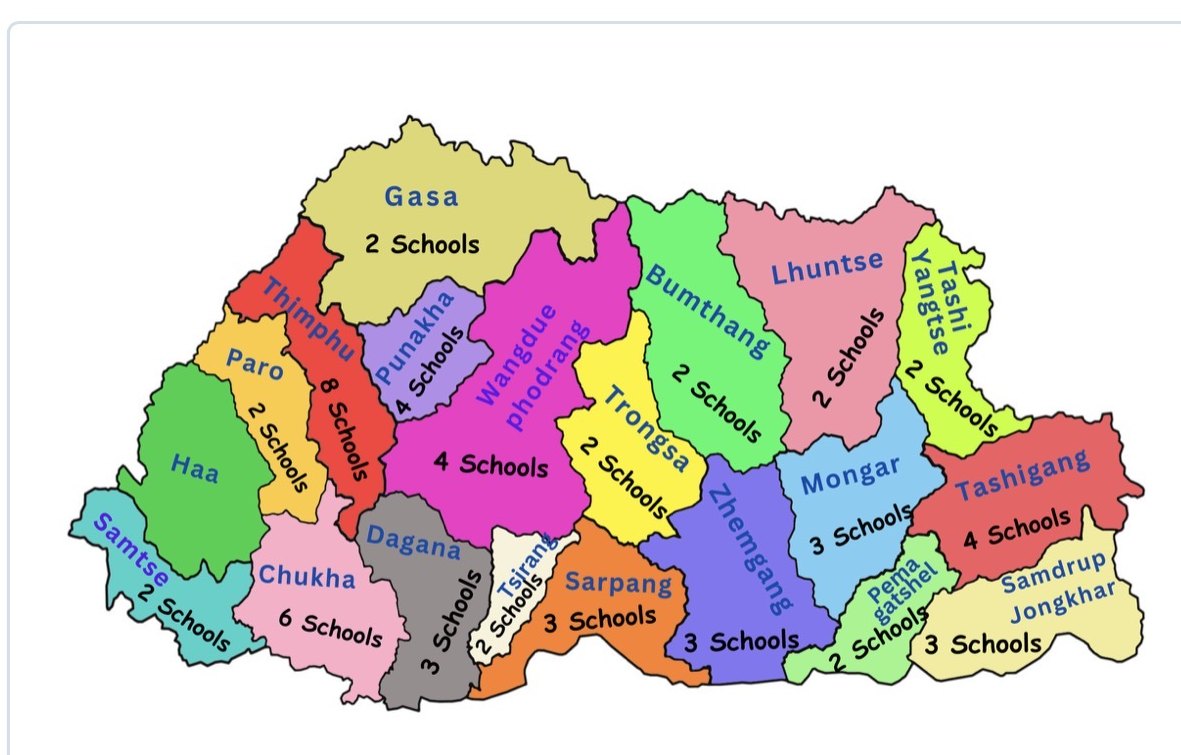
67 schools across 19 of Bhutan’s 20 dzongkhags
* Haa is not labelled on the source map; 2 is derived from the stated total of 61 schools.